
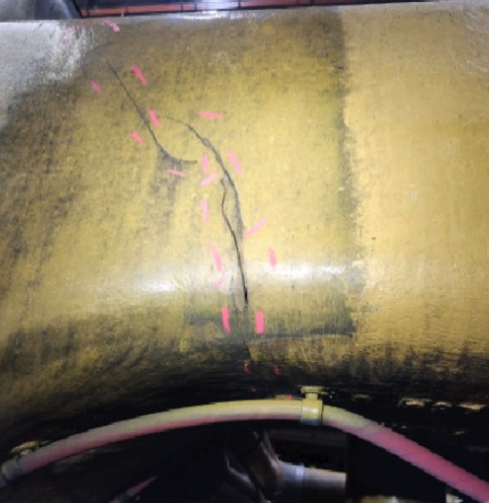
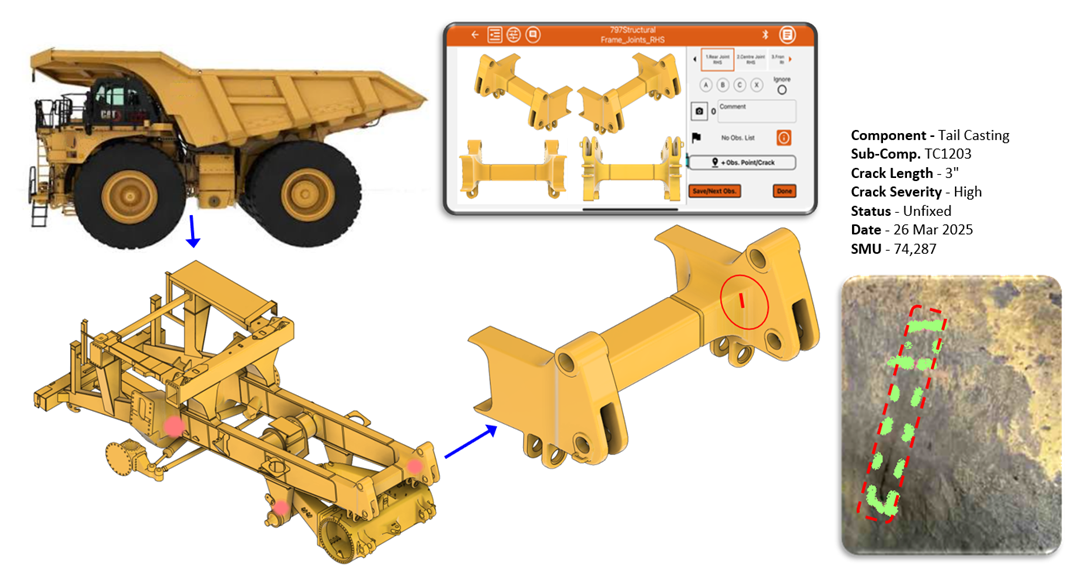
Every mining operation performs structural inspections on its mobile equipment.
Whether it’s an electric rope shovel, hydraulic excavator, haul truck, loader or dozer, inspectors routinely identify cracks, assess repairs and monitor structural integrity to ensure equipment remains safe and reliable.
Yet despite the importance of these inspections, many organisations still manage them using a combination of paper forms, spreadsheets, PDF reports and photographs stored in separate folders.
The team completes the inspection successfully. But the data rarely supports long-term maintenance decisions.
The Challenge
Imagine inspecting the same haul truck every month.
The inspector identifies the crack, photographs it and notes it in the report.
Three months later, the team inspects the machine again.
The inspector now needs to determine:
- Is this the same crack or a new one?
- Has it increased in length?
- Did the team complete the repair?
- Is the repair holding?
- Has the crack reappeared?
- What did it look like six months ago?
Finding those answers can involve searching through multiple reports, comparing photographs, opening spreadsheets and relying on the experience of individual inspectors.
As fleets grow, this becomes increasingly difficult and inefficient.
What Does a Digital Crack Mapping Process Look Like?
Digitising the inspection process creates a permanent history for every structural defect.
Using a mobile device, inspectors can record:
- Exact structural location of every crack
- Photographs taken during the inspection
- Crack length and severity
- Inspection comments
- Recommended maintenance actions
- Repair status
- Date and inspector details
Once synchronised, the information becomes immediately available through a central web platform, providing a complete inspection history for every machine.
Each new inspection builds on the previous one rather than creating another standalone report.
The Benefits
Standardised Inspections – Every inspector follows the same inspection methodology, improving consistency across sites, contractors and maintenance teams.
One Source of Truth – Inspection reports, photographs, crack history and repair records are stored together, eliminating the need to search through multiple systems.
Track Crack Progression – Engineers can monitor cracks over time to see whether they’re stable, progressing or successfully repaired.
Better Maintenance Planning – Maintenance teams can prioritize repairs based on the condition of the entire fleet rather than individual inspection reports.
Inspection Report to Maintenance Teams – the inspection report includes all cracks, their locations and details along with images to assist the welders. The report includes welding instructions as a standard part.
Complete Audit Trail – Every inspection, photograph, repair and engineering comment becomes part of the permanent maintenance history for the machine.
Improved Collaboration – Reliability engineers, planners, supervisors and site personnel all have access to the same up-to-date information, regardless of location.
It’s About More Than Recording Cracks
Digitising structural inspections isn’t simply about replacing paper with a mobile application.
It’s also about creating a structured, repeatable process that transforms individual inspections into a completely engineered process.
When teams can locate, monitor and review every crack over the life of the machine, they make better decisions, prioritise repairs faster and improve long-term structural reliability.
As mining operations continue to embrace digital maintenance practices, the question is no longer whether structural inspections should be digitised.
The question is whether the information you collect today will still be useful, and easy to find, at the next inspection.