
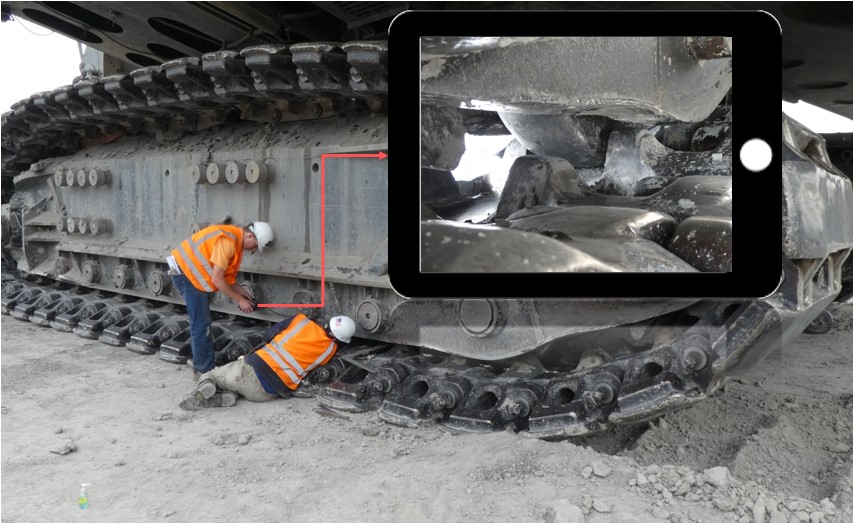
One of the most common observations in mining operations is that two tracked machines performing similar work can consume undercarriage components at dramatically different rates.
It is not unusual to see one machine achieve significantly more operating hours from a set of chains, rollers, or idlers than another machine working in the same area of the mine. At first glance this variability can appear random, but in practice it rarely is.
Regular undercarriage inspections provide the starting point for understanding this behaviour. Each inspection creates a snapshot of the machine’s current condition and contributes to a longer-term picture of how the undercarriage is actually wearing.
A properly conducted inspection provides several important insights.
First, it establishes the current wear position of each component within the undercarriage system. Measurements of chains, rollers, idlers, sprockets, and shoes show how much material has been consumed and how close each component is to its allowable wear limit.
Second, it can reveal variations in wear behaviour. When measurements are compared with previous inspections, technicians and Reliability Engineers can begin to see whether the deterioration rate is stable or changing.
Third, the inspection allows the machine’s wear performance to be compared with the rest of the fleet. If similar machines are wearing at different rates, this often indicates that operating conditions, maintenance practices, or machine usage patterns are influencing component life.
Finally, every inspection adds another data point to the lifecycle record of the machine. Over time these records build a dataset that shows how the undercarriage has behaved throughout its operating life, allowing future inspections to be assessed against established wear trends.
However, inspections only become truly valuable when they are completed consistently.
For undercarriage inspections to provide meaningful lifecycle insight, several basic conditions need to be met:
• inspections must be conducted at consistent intervals
• components must be measured accurately and photographed where appropriate
• any signs of abnormal or accelerated wear must be noted and investigated
• service history, including rebuilds or component replacements, should be recorded with the machine hour meter reading
When these practices are followed consistently, inspection records begin to reveal patterns that would otherwise remain hidden.
In many cases, significant variations in undercarriage wear can be traced back to operational influences: –
Operator technique can have a substantial impact. Some operators naturally are more aggressive and may also use different techniques with the implements. This all affects the way and rate at which the components wear.
Ground conditions also play a major role. Variations in rock size, abrasiveness, moisture content, and chemical composition can all influence how quickly undercarriage components deteriorate.
Maintenance practices contribute as well. Differences in service timing, adjustment practices, or component replacement strategies can lead to variations in how wear develops across machines.
Even seemingly small factors such as track sag, track packing, or the condition of side frames can significantly affect wear across the undercarriage components.
The challenge for many mining operations is that these influences often remain invisible when inspections are viewed as isolated condition checks.
A single inspection can tell you how worn the undercarriage is today.
What it cannot easily tell you is how quickly it got there.
That is where lifecycle analysis becomes important.
When inspection measurements are connected across multiple inspection cycles, Reliability Engineers can begin to measure wear rate, identify deviation from expected behaviour, and forecast remaining component life with far greater confidence.
At that point inspections stop being simple condition reports and become part of a structured understanding of how the machine is actually consuming its undercarriage.
And once that behaviour becomes visible, maintenance decisions begin to change.
Instead of reacting to visible wear, operations can begin to predict when components will reach their limits and plan interventions accordingly.
In many cases, this predictability allows operations to run components closer to their engineered wear limits, extracting more usable life from each undercarriage while still maintaining operational reliability.
For high-cost wear systems such as undercarriage, even modest improvements in component life can translate into significant savings across a fleet.
Understanding wear behaviour is the first step toward achieving that outcome.